

06.03.2026
Environmental stimuli from farms train the immune system
Why does growing up on a farm protect against asthma? In a recent study, researchers from Munich, Borstel and Großhansdorf have identified molecular mechanisms by which farm dust influences immune cells and reduces allergic inflammatory reactions in the lungs. Their findings were published in the journal Science Advances.
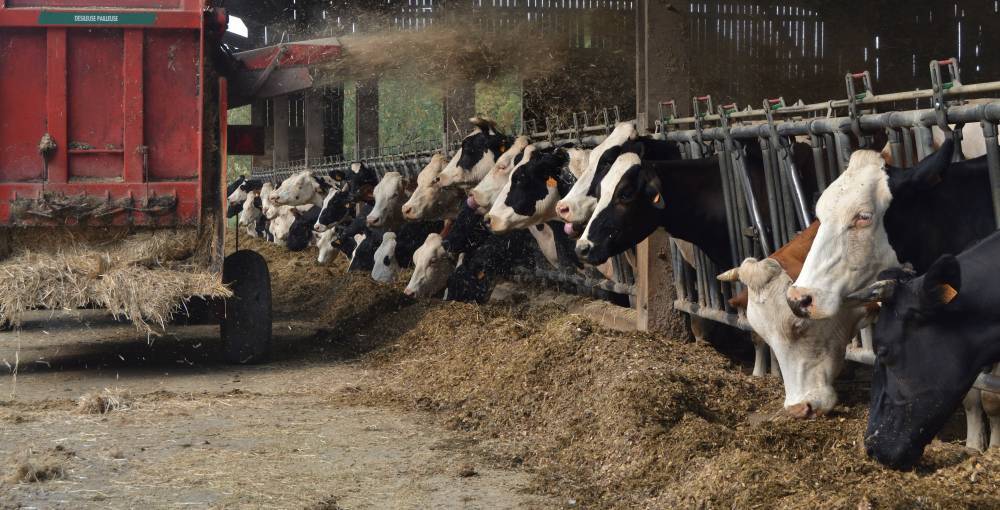
For decades, researchers have observed something remarkable: children who grow up on traditional farms are significantly less likely to develop allergies or asthma than children in cities. What exactly protects their lungs? Years ago, Professor Erika von Mutius from Institute of Asthma and Allergy (IAP, Helmholtz Munich) and scientist at the German Center for Lung Research (DZL) at the CPC-M site, discovered a surprising clue: farm dust from cow barns.
For the recently published study, von Mutius and Professor Önder Yildirim from the Munich DZL site collaborated with the working groups of ARCN scientists Professor Michael Wegmann (Research Center Borstel, Leibniz Lung Center) and PD Dr. Henrik Watz (LungenClinic Grosshansdorf) to decipher the molecular basis of this protection. The results show how distinct environmental stimuli reprogram the immune system at the epigenetic level, thereby “training” it against allergic inflammation.
Training the immune system to prevent overreaction
In an established asthma model, the researchers exposed mice to a farm dust extract to trigger an allergic reaction. They then isolated the animals’ immune cells. They also examined immune cells from the blood of asthmatic patients and healthy control subjects. The results showed that, after exposure to farm dust, there was significantly reduced inflammation of the lungs, less mucus formation and greatly weakened inflammatory immune responses.
The researchers identified macrophages as important players in this process. These cells play a role in the activation of allergic reactions. However, farm dust reprogrammed them, causing them to produce less CCL8*, a messenger substance that attracts eosinophils, a type of inflammatory cells. Additionally, the macrophages produced fewer MHC-II molecules, which limits antigen presentation to T cells and thus their activation. This is a crucial step in the allergic immune response.
How does farm dust reprogram the immune system?
The changes triggered by farm dust are based on epigenetics. If people are repeatedly exposed to allergens, inflammatory genes such as CCL8 or MHC-II can be permanently activated under certain circumstances. At a molecular biological level, this increases the accessibility of these genes, thereby increasing their activity. Farm dust disrupts this cascade, preventing macrophages from sending strong allergy signals.
Önder Yildirim concludes that not all environmental stimuli are harmful: “We are deciphering how beneficial environmental signals can protect human health and actively strengthen immune resilience. What we learn from asthma may reshape prevention strategies across chronic lung diseases, including COPD and pulmonary fibrosis.”
The effects are equally significant in both sexes
Michael Wegmann’s team ensured that there were no differences between the male and female test animals and effects hold true for both sexes. Wegmann believes that the findings, published in Science Advances, could help trigger the protective effect through preventive treatment with components of farm dust. “To do this, however, the components that mediate this effect — and their exact doses — would have to be identified. If we make progress here, it could be used to treat children and prevent allergies and asthma.’”
Erika von Mutius sums it up as follows: “If we understand how the environment strengthens the immune system, we can treat and prevent chronic diseases. The future of medicine could lie in harnessing the biology of resilience”.
*CCL8: CC-chemokine ligand 8
**MHC-II: Major histocompatibility complex II
Further information:
Information from the Airway Research Center North (ARNC):
Could dust from farms protect against asthma?
Publication:
Dragunas G, Klotz M, Chen S et al. A beneficial environment promotes immune resilience through epigenetic regulation. Sci Adv. 2026 Feb 27;12(9):eady7317. https://doi.org/10.1126/sciadv.ady7317
Contact

PD Dr. Michael Wegmann
Leiter der Forschungsgruppe "Lungen-Immunologie"
+49 4537 / 188-5830