

09.07.2026
Launch of SeqNET+: Federal Ministry of Health-Funded Project Begins Work on MDR-TB Diagnostics
With a virtual kick-off meeting held on 17 June 2026, the project "SeqNET+ – Network for Genomic Diagnostics and Surveillance of Pulmonary Pathogens with a Focus on Drug-Resistant Mycobacterium tuberculosis" was officially launched. Funded by the German Federal Ministry of Health (BMG) through the Global Health Protection Programme (GHPP), the network aims to promote the sustainable implementation of modern diagnostic tools for the detection of multidrug-resistant tuberculosis (MDR-TB) in partner countries across Africa and Eastern Europe.
The project focuses on improving the diagnosis of tuberculosis (TB), an infectious lung disease caused by the bacterium Mycobacterium tuberculosis (Mtb). A particular priority is the rapid and accurate detection of drug-resistant forms of the disease. Supported by the German Federal Ministry of Health through the Global Health Protection Programme (GHPP), SeqNET+ seeks to ensure the sustainable use of modern diagnostic technologies for the detection of multidrug-resistant tuberculosis (MDR-TB) in Mozambique, Namibia, Eswatini and the Republic of Moldova. Building on previous GHPP initiatives, the project continues a successful international collaboration aimed at strengthening TB diagnostics and surveillance in the partner countries.
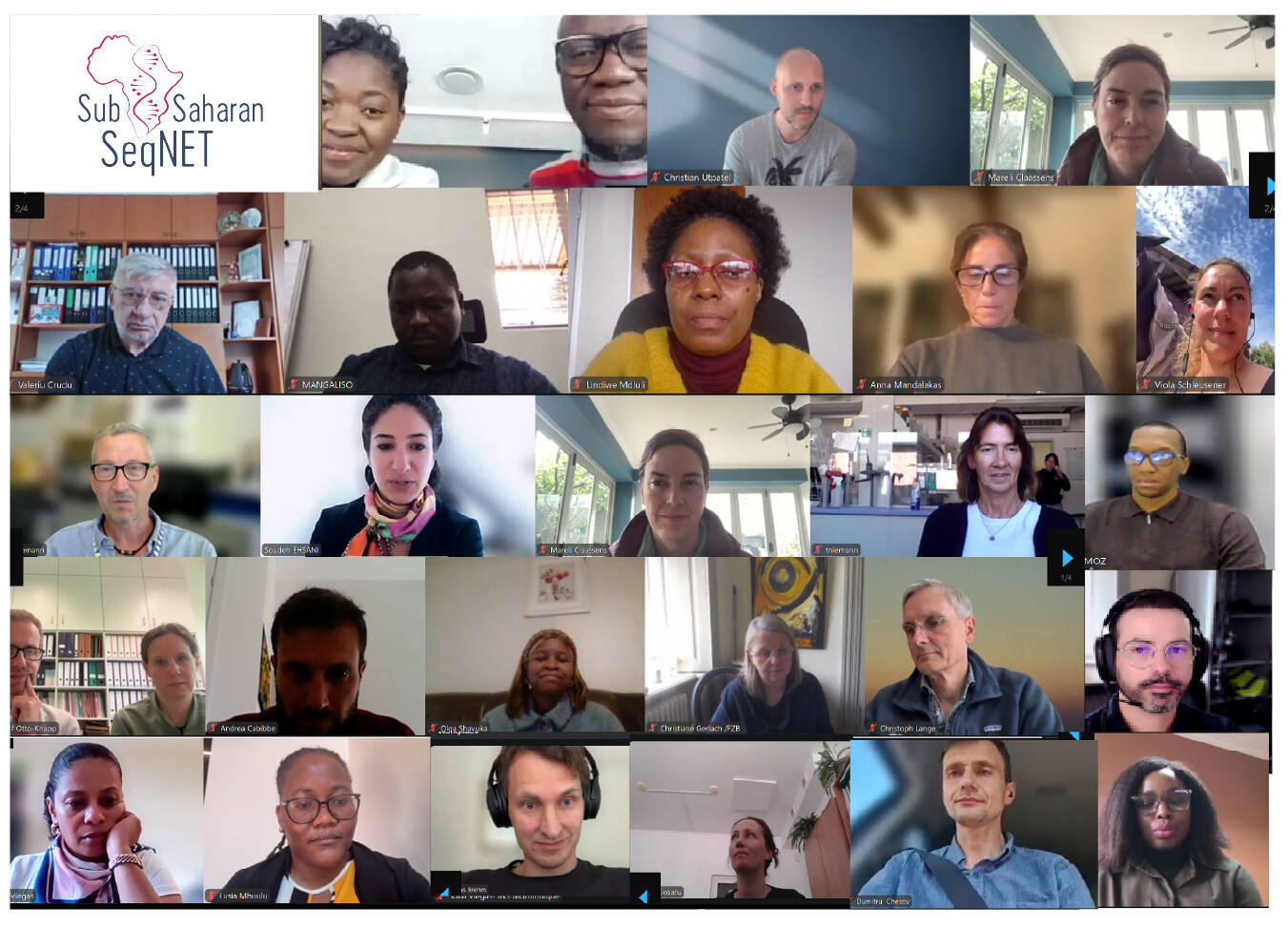
Around 40 participants from eight countries attended the virtual kick-off meeting, including representatives from three African partner countries (Namibia, Mozambique and Eswatini) and five European countries (Denmark, Italy, the Republic of Moldova, Switzerland and Germany). Scientists, clinicians, public health experts, laboratory specialists and project management partners came together to present achievements from previous GHPP initiatives and discuss the next steps toward achieving the objectives of the new SeqNET+ project.
In many parts of Africa and Eastern Europe, access to modern TB diagnostics is essential, as multidrug-resistant tuberculosis is often detected too late using conventional methods. Delayed diagnosis contributes to ongoing transmission and poorer treatment outcomes. Rapid and reliable diagnostic approaches enable the early identification of resistant strains, support more effective treatment decisions and strengthen public health interventions. Over recent years, significant progress has been made in introducing modern TB diagnostics in Mozambique, Eswatini and Namibia. With the support of clinical experts, findings generated in specialised laboratories have been translated directly into TB clinics and national treatment programmes, allowing patients with MDR-TB to benefit from improved diagnostics and more targeted care.

All partners of the SeqNET+ network reaffirmed their commitment to expanding the use of DNA sequencing for rapid TB diagnosis and the molecular surveillance of drug-resistant M. tuberculosis strains in high-incidence countries. Another key focus of the project is the establishment of regional training centres and the development of sustainable laboratory capacity.
Project activities are carried out in close collaboration with the German Central Committee against Tuberculosis (DZK) and the WHO Regional Office for Europe, which particularly supports the project's new partner, the Republic of Moldova. In parts of Eastern Europe, the burden of multidrug-resistant tuberculosis continues to rise, placing increasing pressure on diagnostic capacities and treatment programmes.
The Republic of Moldova has already benefited from modern diagnostic tools introduced through previous initiatives. SeqNET+ now provides a structured framework to further integrate these technologies sustainably into routine TB control, while strengthening both diagnostic and treatment strategies.
The three-hour kick-off meeting was organised by the scientific project coordinators Dr Leonardo de Araujo, Dr Christiane Gerlach and Prof. Dr Stefan Niemann from the Borstel Research Center, Leibniz Lung Center. The meeting provided project partners with an overview of planned activities, timelines and expected outcomes. Participants also had the opportunity to introduce their institutions, present their current work and identify potential areas for future collaboration. The discussions were highly interactive and fostered a constructive exchange among all consortium partners.
"Drug-resistant tuberculosis represents a growing threat to global public health," said Stefan Niemann, project coordinator. "SeqNET+ therefore combines state-of-the-art genome sequencing, capacity building and digital innovation to improve the early detection of drug-resistant pathogens and to strengthen the molecular surveillance of tuberculosis and other respiratory infections across Africa and Eastern Europe."