

10.07.2026
Young scientists from Borstel at the Lindau Nobel Laureate Meeting
Dr. Lindsay Sonnenkalb and Dr. Tim Hasenbein from the Research Center Borstel, Leibniz Lung Center (FZB), participated in this year’s Lindau Nobel Laureate Meeting. The renowned event brings together outstanding young researchers from around the world with Nobel Laureates and promotes scientific exchange, international networking, and interdisciplinary collaboration.
The Lindau Nobel Laureate Meetings take place annually on Lindau Island on Lake Constance and have developed into a unique international science forum since their foundation in 1951. This year 70 Nobel Laureates meet approximately 600 students, doctoral researchers, and postdocs from around the world. The 75th Lindau Nobel Laureate Meeting, which took place from 28 June to 3 July 2026, focused on interdisciplinary exchange and brought together different Nobel Prize disciplines.
Participation in the meeting is based on a multi-stage nomination and selection process. In addition to outstanding scientific achievements, personal commitment, motivation for research, and the potential to contribute to the international scientific community play an important role in the selection process.
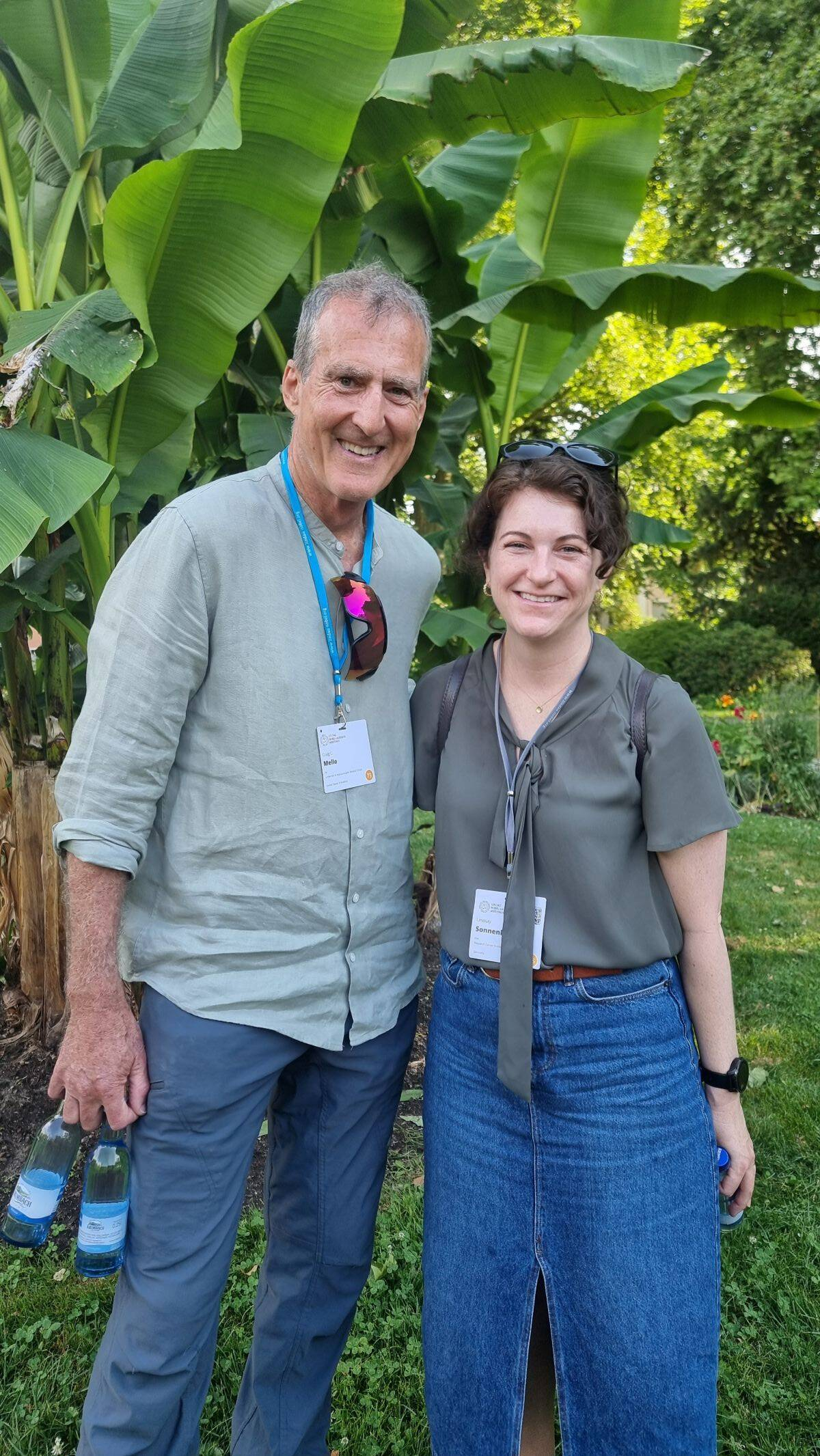 Lindsay Sonnenkalb and Nobel Laureate Craig Mello at the Lindau Nobel Laureate Meetings
For Lindsay Sonnenkalb from the research group “Molecular and Experimental Mycobacteriology” and Tim Hasenbein from the research group “Data Science in Lung Research”, participation was a unique opportunity: “I wanted to attend this meeting to connect with young scientists from around the world, to build collaborations and learn about the innovations coming from other research fields. Getting the opportunity to meet with Nobel Laureates who are pioneers in their field was a dream come true,” says Lindsay Sonnenkalb.
The meeting exceeded her expectations: “The meeting was extraordinary! I had not experienced such an atmosphere of outgoing people since Covid-19 (or maybe ever), and the Nobel Laureates were remarkably approachable, offering stimulating conversation about science, the industry, and their paths to the Nobel Prize. Beyond the many new connections I made both inside and outside my field, I also met politicians and foundation leaders who shared valuable insights and career advice.”
Lindsay Sonnenkalb was particularly inspired by her exchange with Nobel Laureate Craig C. Mello, who gave her interesting ideas for her future research. She was also deeply impressed by discussions on artificial intelligence and climate change: “AI is a remarkable tool for science, but many young scientists are concerned that its drawbacks may outweigh its benefits. The talks on climate change and sustainability were particularly inspiring, as scientists appear to be tackling the climate crisis with impressive new technologies, especially in chemistry.”
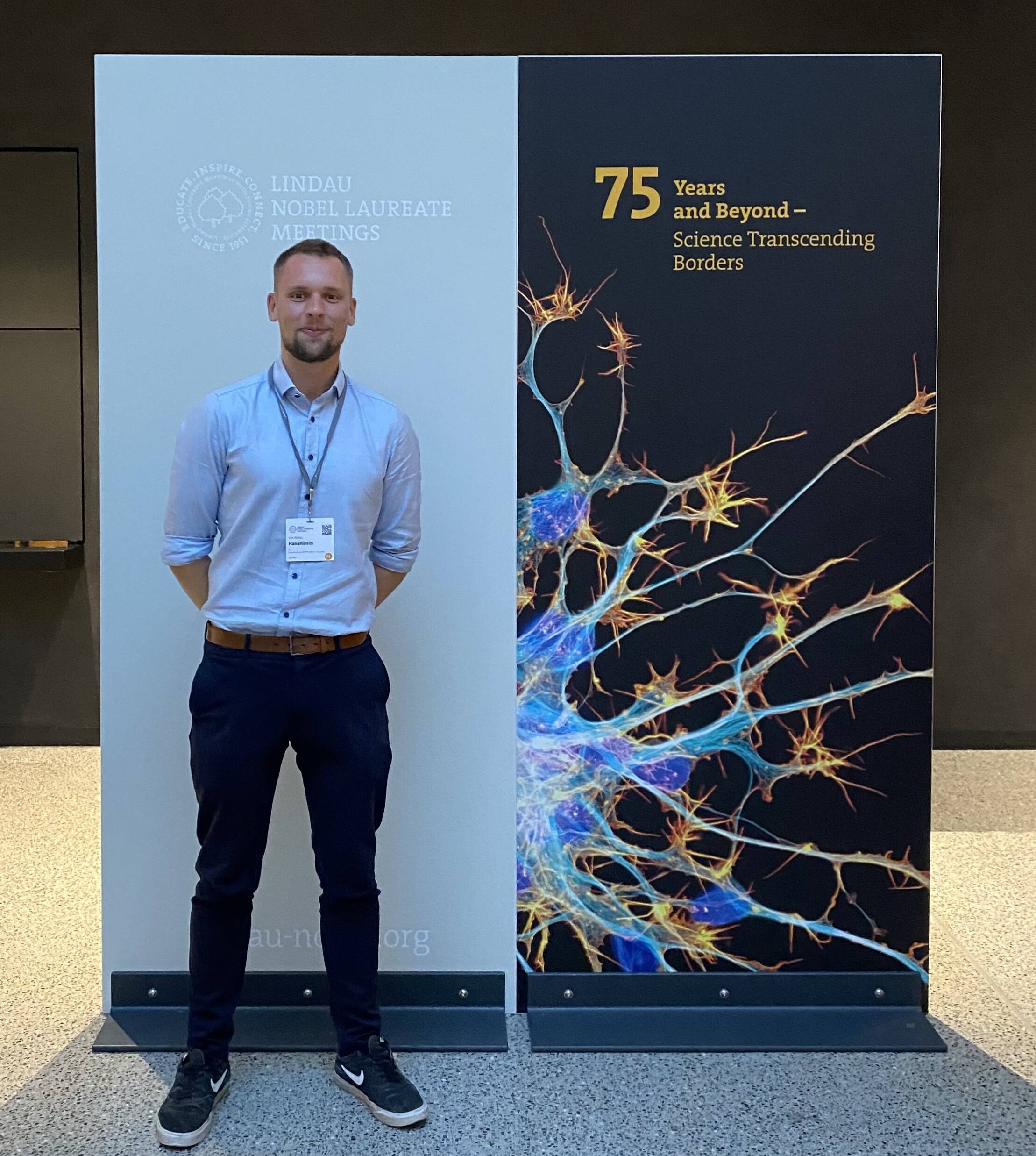 Tim Hasenbein from the ‘Biomolecular Data Science in Pneumology’ research group at the Lindau Meeting of Nobel Laureates
For Tim Hasenbein, participation in the Lindau Nobel Laureate Meeting was also a highly valuable experience. He was particularly impressed by how openly the Nobel Laureates spoke about their personal experiences and the ups and downs of their scientific careers: “It was incredibly inspiring to hear the Laureates speak openly about the realities of their careers, including major setbacks like failed projects and periods of unemployment. Learning how they maintained the drive to persevere through these difficult moments was profoundly encouraging.”
The interdisciplinary focus of the meeting was another particularly valuable aspect for Tim: “It was my studies in Medical Life Sciences that first revealed to me how breakthroughs emerge when diverse fields converge. Since then, I have been committed to cross-disciplinary work, convinced that innovation thrives at the intersection of ideas. With a background in biology, medicine, and data science, I derive great satisfaction from bridging disciplines and perspectives.”
One message from the Nobel Laureates remained particularly memorable for him: “They emphasized a powerful message of personal accountability: the importance of not feeling victimized by challenging circumstances or externalizing blame, but instead taking decisive action to move forward. They also reminded us that scientific career paths are rarely linear, that you can only connect the dots looking backward, making comparisons to others pointless. Above all, the most impactful takeaway was their reminder to focus on the core purpose of our work: ensuring we never lose sight of why we are doing an experiment and what question we would like to answer.”