

05.03.2026
Pan-African Network for Genomic Surveillance Holds Third Annual Meeting in Maputo
Radisson Blu Hotel, Maputo, Mosambik, 10.–12. Februar 2026
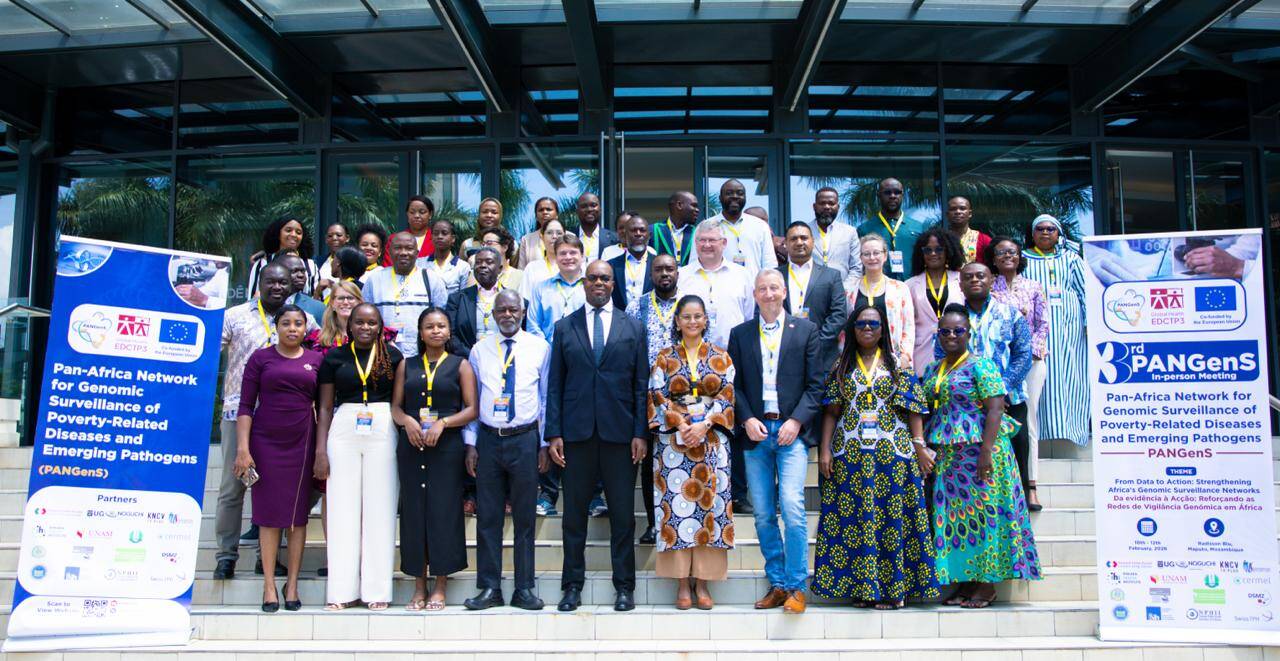
From February 10–12, 2026, scientists, physicians, and health representatives from twelve African and three European countries gathered in Maputo, Mozambique, for the third in-person meeting of the Pan-African Network for Genomic Surveillance of Poverty-Related Diseases and Emerging Pathogens (PANGenS). Since 2023, the consortium has been building genome-based surveillance for tuberculosis (TB), malaria, and HIV in sub-Saharan African countries, including Ghana, Mozambique, Namibia, Tanzania, Gabon, Nigeria, Benin, Gambia, South Africa, Sierra Leone, Togo, and Liberia. The meeting highlighted the consortium’s growth, collaboration, and impact on public health research in partner countries.
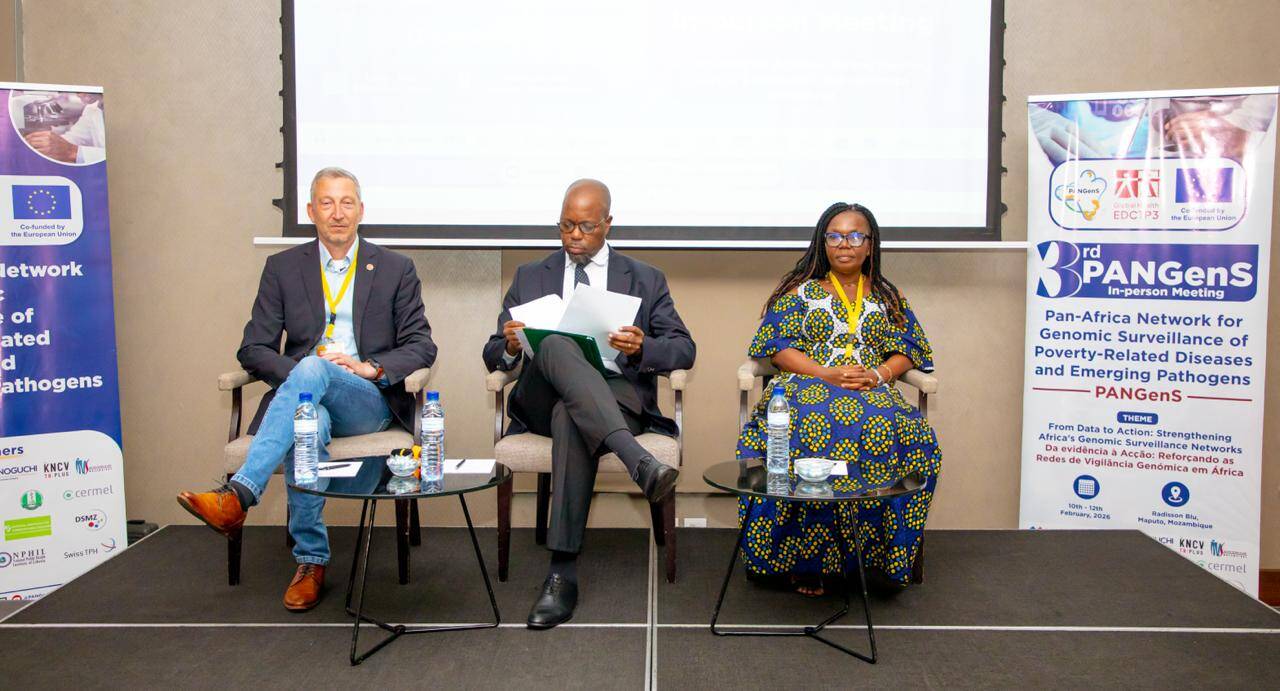
The opening ceremony was led by Dr. Eduardo Samo Gudo Jr., Director General of Mozambique’s Instituto Nacional de Saúde (INS). The INS is the national public health institute in Mozambique, engaged in research, surveillance, and improving population health. Dr. Eduardo Samo Gudo Jr emphasized that TB remains a major public health challenge, noting nearly 48,000 new cases in the first half of 2025, with an estimated 120,000 annually. He highlighted the relevance of PANGenS for addressing global challenges, especially in the context of climate change and its impact on infectious diseases such as TB and malaria. Dr. Gudo recommended incorporating climate change into the consortium’s discussions and strategic planning for the current year.
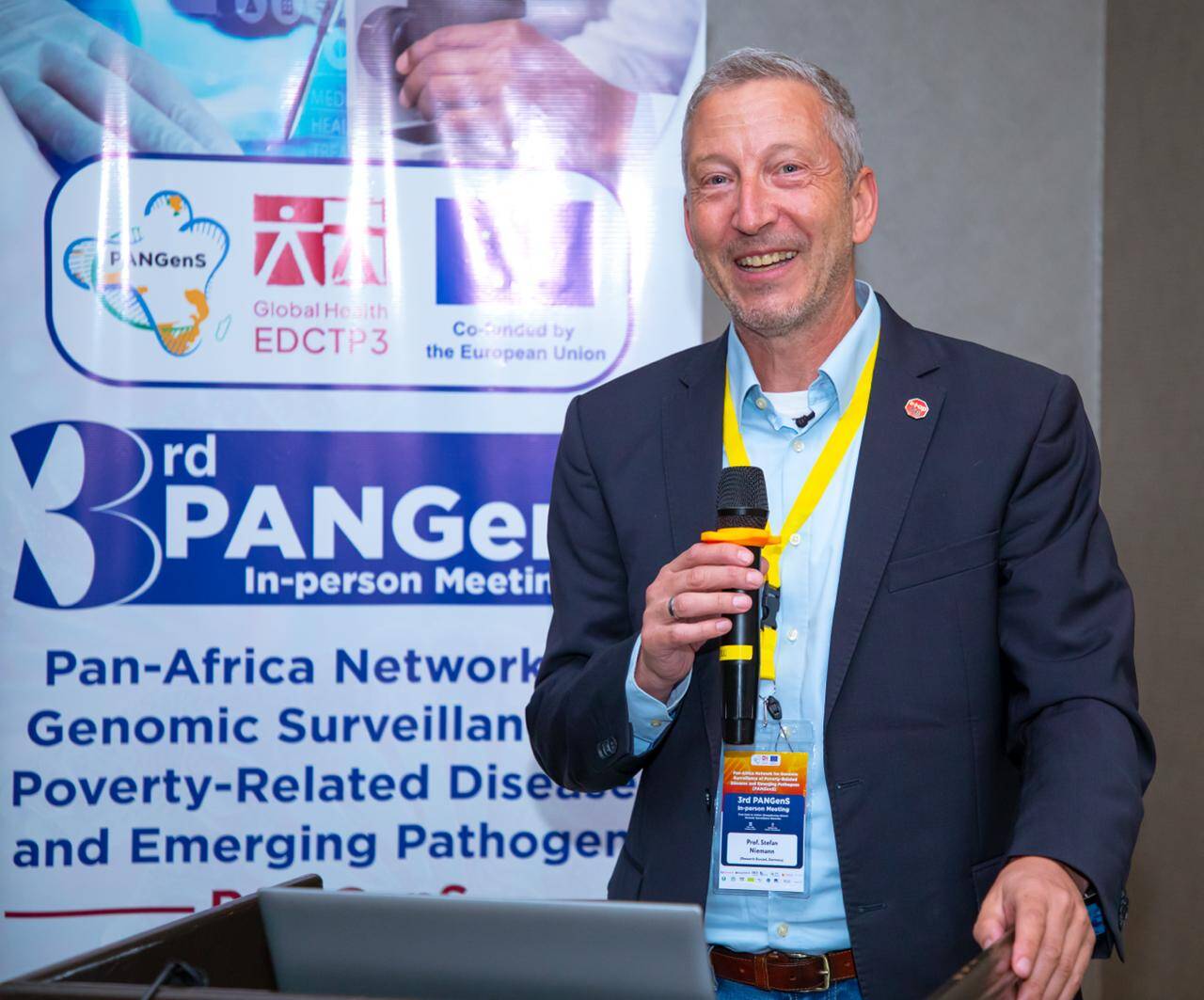
This strategic update was reflected in the opening remarks of the coordinators, Prof. Stefan Niemann from the Research Center Borstel, Leibniz Lung Center in Germany, and Prof. Dorothy Yeboah-Manu, Director of the Noguchi Memorial Institute for Medical Research (NMIMR) at the University of Ghana. The coordinators also reviewed the progress achieved since the project’s launch in July 2023 and outlined strategic priorities to further strengthen the established capacities in genomic epidemiology across the twelve African countries.
Highlights of the Scientific Program
The scientific program included high-level presentations and discussions on innovative approaches to genomic surveillance:
- Sébastien Gagneux from the Swiss Tropical and Public Health Institute delivered a keynote lecture on “Molecular Surveillance of Multidrug-Resistant Tuberculosis (MDR-TB): The Role of Epistasis.” He described the role of different genes in shaping the characteristics of the TB pathogen Mycobacterium tuberculosis. Epistasis is a well-known phenomenon in genetics where one gene can influence the effect of another gene. A change in one gene (mutation) can thus affect the function of another unchanged gene, or a combination of mutations can result in completely altered traits of the bacterium. In TB pathogens, epistatic interactions have been shown to enhance bacterial fitness even though individual mutations may disadvantage the bacterium. These insights illustrated the critical role genome-based epidemiology can play in TB control.
- Shaheed Vally Omar from the National Institute for Communicable Diseases (NICD) in South Africa spoke on “Bedaquiline Resistance Development and Targeted Next-Generation Sequencing (tNGS) in South Africa,” highlighting how modern genome-based technologies are transforming TB surveillance and strengthening resistance monitoring systems. Bedaquiline is regarded as a promising treatment for hard-to-treat TB. Recent studies, supported by advanced sequencing technologies, show that Bedaquiline’s effectiveness can be influenced by epistatic effects. TB pathogen mutants carrying such traits have already triggered unnoticed outbreaks in African countries.
These presentations demonstrated the importance of genomic tools in early detection of resistance, tracing transmission pathways, and designing targeted public health interventions.
Reports from Individual Study Sites
During subsequent study site reports, partners shared progress, challenges, and strategic insights from their respective contexts, highlighting measurable advancements in implementing genomic surveillance. Progress in laboratory capacity expansion was also reported, with particular emphasis on cross-country collaboration in monitoring drug-resistant TB and malaria. These updates underscored the consortium’s integrated and multidisciplinary approach to strengthening genomic epidemiology across Africa.
Strategic Outlook
Participants agreed that climate-related emergencies, such as recent floods in Mozambique, underscore the need for resilient lab systems, timely data sharing, and coordinated surveillance. The consortium reaffirmed its commitment to integrating climate-sensitive strategies into current and future activities.
The three-day meeting brought together all 16 partner institutions, fostering intensive scientific exchange and collaboration. PANGenS reaffirmed its dedication to genomic surveillance of drug-resistant TB and malaria, capacity building in partner countries, and sustainable Africa-Europe partnerships.
PANGenS is supported by Global Health EDCTP3 and co-financed by the European Union, enabling cross-continental collaboration, innovation, and sustainable capacity development to address drug-resistant infectious diseases.
